

Miami Crossing
Growing a true town center from the ground up
Miami Township has no traditional civic center, no central gathering place that functions as the community’s heart. Miami Crossing, with its proximity to the Township Government Center, Dayton Metro Library branch, and RTA transit hub, is the closest thing to a town center that exists, but by default rather than by design. The Miami Crossing Master Plan changes that. Guided by six big ideas—inviting, vibrant, attractive, beautiful, identifiable, and livable—the plan gives the Township a clear set of strategies to guide investment, attract new uses, and build the kind of place where people do not just shop, but genuinely choose to be.
Readiness before opportunity arrives
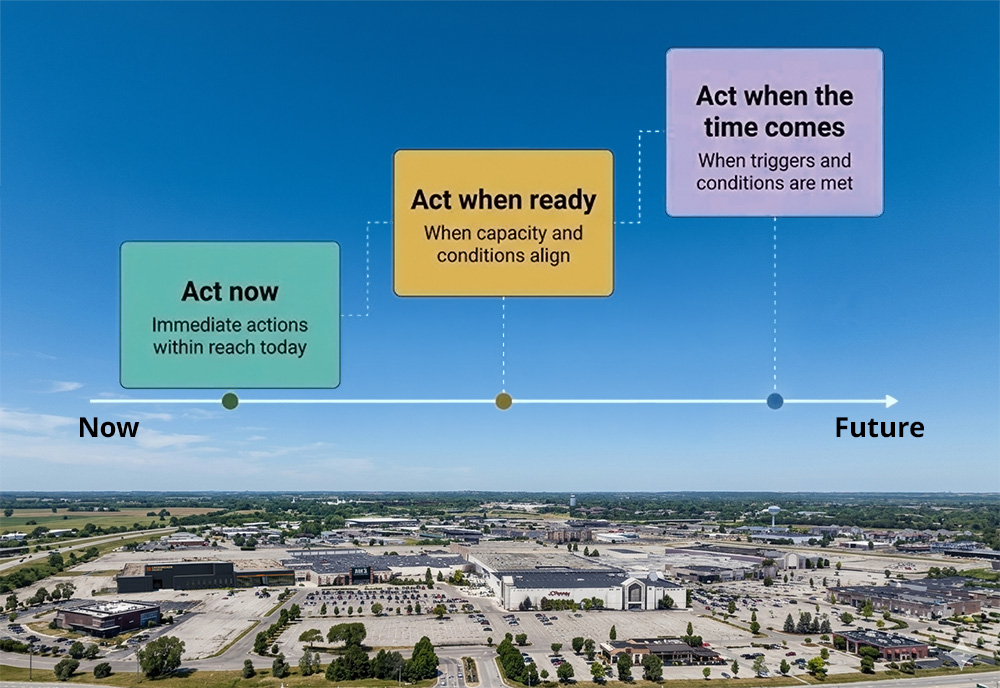
A lot of what people want to see happen at Miami Crossing is not within the Township’s direct control. The Dayton Mall and the properties surrounding it are privately owned, and their owners make decisions about investment, tenancy, and redevelopment on their own timelines. What the Township does control is whether it is ready when those decisions arrive—and whether it has the tools to respond. The Miami Crossing JEDD, established in 2009 and covering 192 acres, provides a proven governance and funding mechanism, with its 2.25% income tax on district employees reinvested entirely back into the district. Combined with the TIF, established in 2005 to capture and reinvest property value increment over a 30-year term, the Township has meaningful resources to bring to the table. The plan is structured around three postures—act now, act when ready, and act when the time comes—ensuring that every action is grounded in real conditions, and that the Township is never caught flat-footed when a trigger fires.
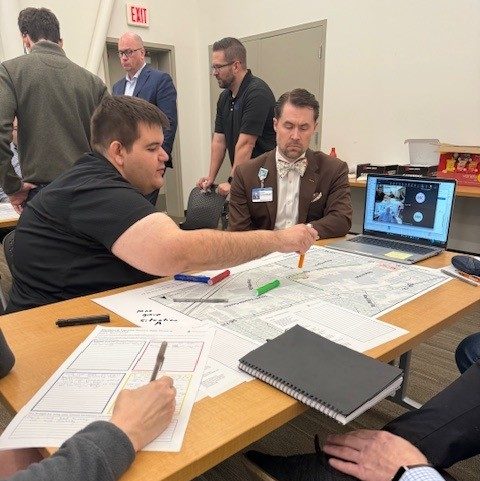
Ground the work in functional, technical, and financial capacity of the community
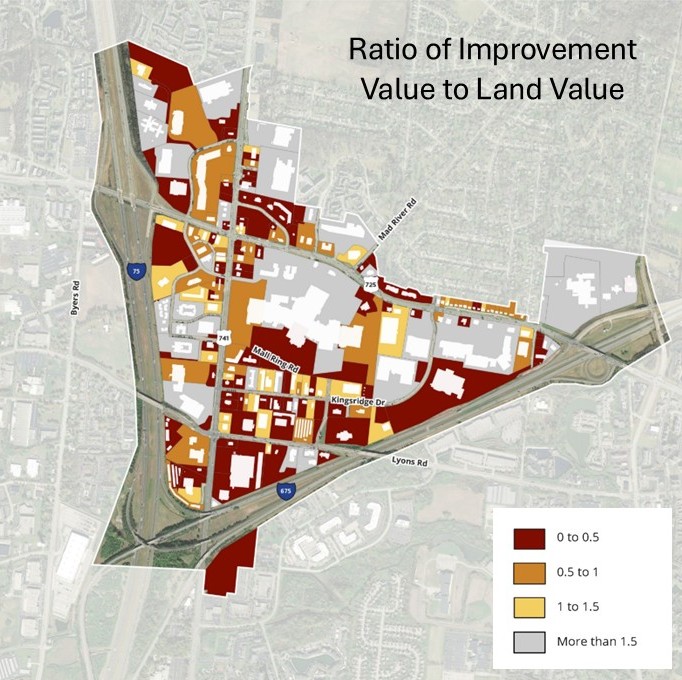
Miami Crossing’s most abundant resource is not its buildings or businesses—it is surface parking. The vast asphalt fields surrounding the Dayton Mall represent both the district’s most visible challenge and its most significant opportunity. When market conditions align and ownership is willing, these flat, accessible, infrastructure-ready parcels are the most viable candidates for the walkable, mixed-use redevelopment the community envisions. The plan draws on national precedents to frame a realistic pathway for Miami Crossing’s own evolution.
Related News
Tags
Project Type: mall area master plan
Community Type: township
Client: Miami Township
Services: land use, community engagement